Thanks for all the suggestions. I’ll give it another try and keep you guys posted.
1 Like
This is what kept happening! The solder would distribute on the tip of my iron and never drip or travel to the board/wire. For some reason, I thought I saw somewhere to dip the tip into flux before. Seems like maybe that was my problem? Was the flux keeping the solder on the iron?
The idea of flux core solder is the flux has a lower melting point so it should flow out first and then the solder should follow. It just doesn’t always work and often evaporates to fast and never makes it off of the iron.
In your situation, if you have solder tinned tip, add flux to the pad and just touch the tip to it. The solder will leave the tip and flow to the pad.
I worked on sabers for years without extra flux. It changed my life at the workbench one it got to using it regularly. But again, it starts to smell good but it’s toxic. Please vent and use a mask or filter fan.
I just did some small surface pad soldering on a proffie v3 and it took planning (which way do I hold the wire?), flux, small solder, PTFE wire (like profezzorn mentioned), magnification, lighting, and a cup of mint tea to soothe the nerves. It’s all about the set up, then up to 2 seconds of work.
Very satisfying.
Very tasty, can confirm.
I guess I agree with that whole “safety” bit too 

But yes, you should have something so that you’re not breathing it in.
1 Like
Flux is a chemical cleaner which removes oxides from metal surfaces when hot. Once the oxide is gone, the tin has a much easier time binding to the metal. Note that the oxide comes back fairly quickly, so once the flux has evaporated you only have a few seconds before it goes back to “non-stick” again.
Solder stuck to the tip doesn’t have any flux in it because it will have already evaporated. So if you have a lot of solder on your tip, it’s usually better to clean it off and start over. (Unless you have separate flux on solder surface.)
For really fiddly soldering, liquid flux is pretty much a requirement though. 
For “regular” soldering, my method is to add a tiny amount of solder to the iron, as that helps with heat transfer, then touch that to one side of both things that are being soldered. Wait until the tiny bit of solder seems to adhere to the surfaces, then bring in the solder, ideally from the other side, but often I end up touching it to the solder iron to speed things up a little. The whole joint should heat up quickly and then I just need to feed in enough solder to make a convex joint, then remove the solder and then the iron. The whole thing should only take a ~2 seconds.
How to solder isn’t exactly a new science:

2 Likes
That was a good ‘cup of coffee’ film!
Corrected my post to the two second rule. Sounds risky to go over.
Key point: don’t use plumbers flux. I have some around and am guilty of using it on electronics. Never had a problem, but perhaps it’s just slowly corroding wherever I might not have fully cleaned it.
Got it working!
Mostly. I think my iron was way off with temp. gauge. I raised it significantly and had more luck. Still not good. Unfortunately, I really had trouble bridging those two led pads on top, so i think im going to have to redo that part. The color has gone in and out a few times, so I’m thinking it’s not soldered firmly in place. I won’t show you pics of my embarrassing soldering😅, but as of now, it works!
I won’t kiss your butts too much, but I can’t tell you guys how much I appreciate the help on here. I don’t feel like this is a normal thing. No one ever talks trash or demeans. Everyone just offers a helping hand for no reason other than to help out a stranger. You’ve helped restore my faith in humanity  . This is a pretty amazing community on here.
1 Like
I’m also very new to soldering and what helped me was running two separate wires from the negative of the npxl connector, so I have one going to led2, and the other to led3.
1 Like
It is normal here.
I would, but it is against the rules! 
This place is too amazing to risk getting banned.
And to make the saber community a better place.
If you stick around long enough, you will also be able to find joy in helping others.
1 Like
That’s kinda the hardest part. I bend a leg from a resistor into a “U” shape and slide it into the two pads. Then I flux paint it a bit and run solder across the wire on to the pads. Last, I twist and tin the two 22AWG negatives and solder them perpendicular to the bridge. Like this:
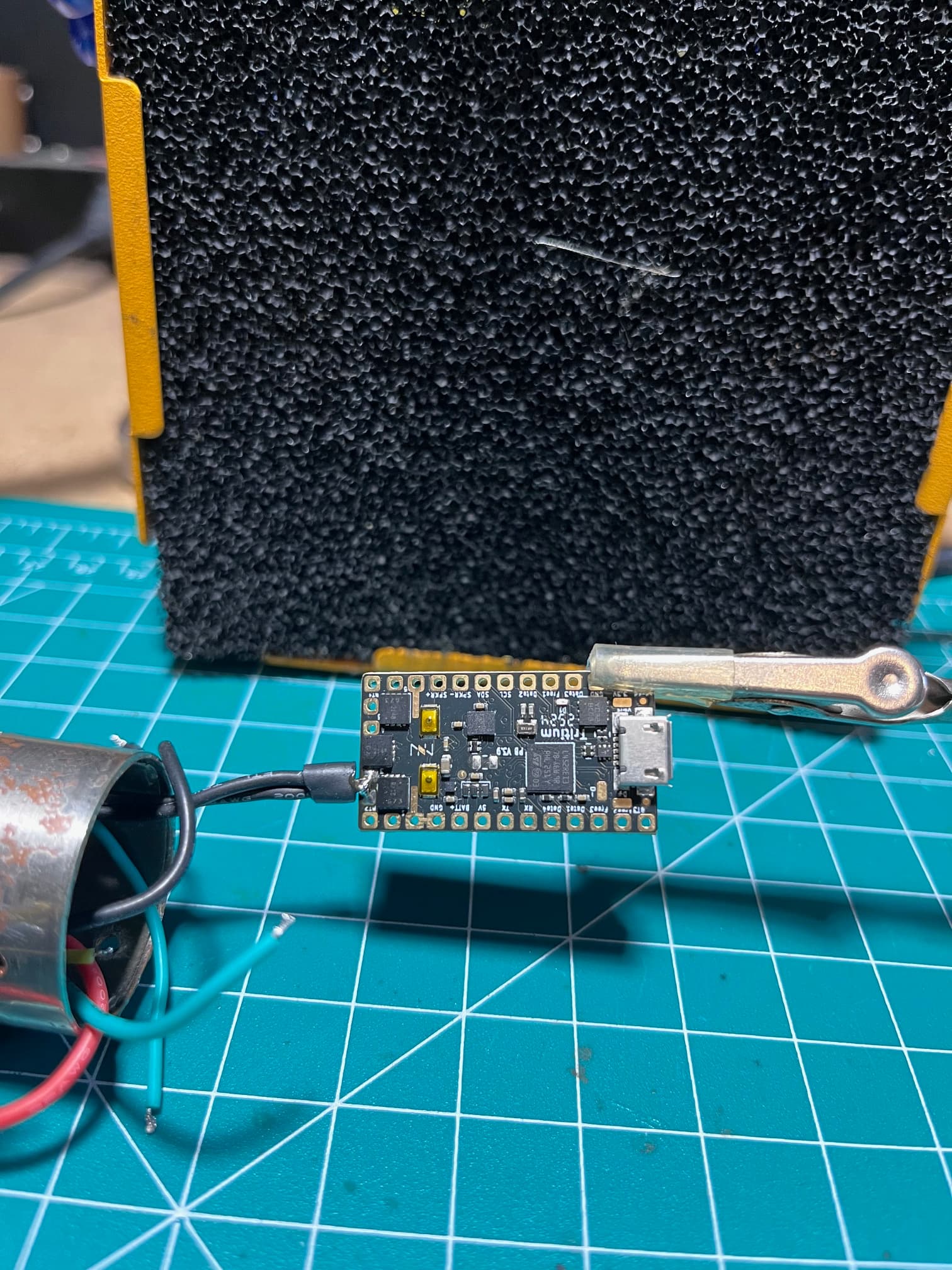
Profezzorn sets the pace by being a great teacher. We appreciate your interest in the hobby!
1 Like
So, I keep running into the same issue with the blade and not quite sure what’s going on. The color will randomly change. Especially white. White will turn yellow or almost orange. A lot of times, just turning off and on will correct it, or if I clash it a bit, which makes me think it must be a loose connection. I thought it was the pcb wire going to those led pads that I was having trouble soldering. They seem to be on there pretty good, though? Does that sound like the cause to you guys? I unfortunately don’t really have an easy way of checking the pcb board to see if anything is loose there. Would that symptom be indicative of anything else being loose? My soldering certainly isn’t pretty, but everything appears secure and not bleeding onto other tabs or anything.
Based on the color you describe, it does sound like voltage drop to me, specifically because of a bad connection.
Yeah, if hitting it can make it go back to normal then that definitely sounds like something is probably loose…
I don’t have any good advice on where to look for that though. It’s probably not the solder joints themselves, but the wire near the joints could be frayed/broken from stress and/or not laying them properly.
1 Like